

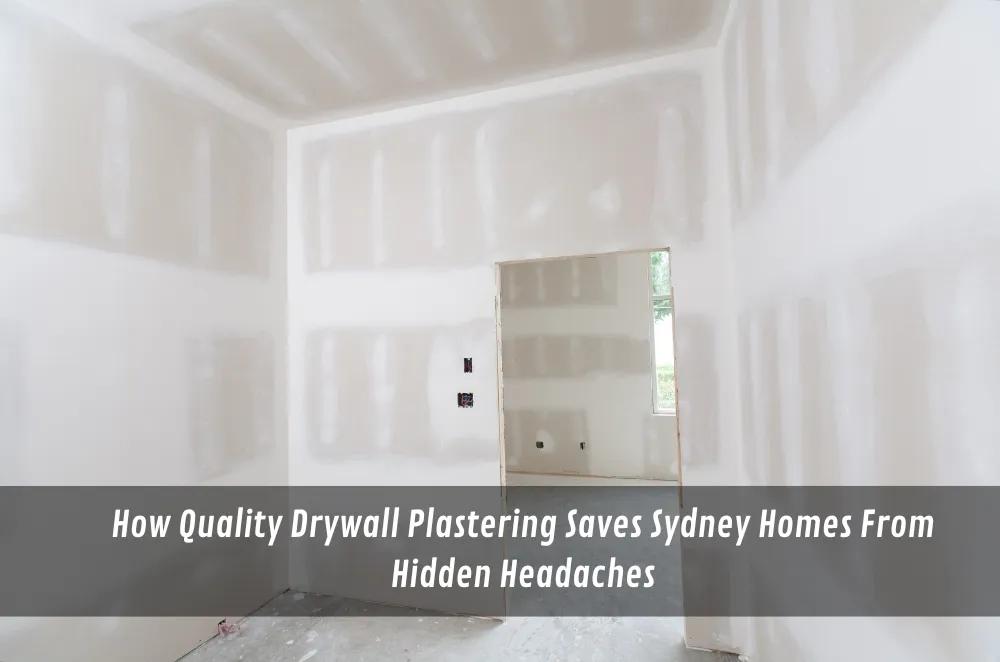
Quality drywall plastering for durable Sydney homes.
Sydney’s weather swings from humid summer afternoons to chilly winter mornings, and those shifts put every interior wall through a quiet stress test. Cracks, dents, and sagging joints creep in when the surface finish isn’t up to the job. For renovators and first-time owners alike, the difference between a wall that holds firm and one that flakes within a year often comes down to one trade skill: practical drywall plastering advice.
The Climate Factor Few Renovators Consider
Gypsum boards themselves don’t mind temperature changes, but the joints between them certainly do. Each mini-movement along those seams can widen hairline cracks. Add Sydney’s sea air, and any exposed joint compound absorbs moisture that later dries out and powders. Over time you’re looking at:
Paint that lifts around screw heads
Fine vertical cracks where two boards meet
Bulging tape where humidity has weakened adhesion
Those flaws aren’t just cosmetic. Once moisture slips behind paint, mould spores find a home and the repair bill rises. A robust plastering approach counters that risk by sealing every join, recess screw heads below the paper surface, and finishing with a compound blend matched to room usage (standard, water-resistant, or fire-rated).
Quick comparison of shortcut plastering versus a full three-coat system
Approach | Typical Time Saved | Visible Result After Six Months | Likely Long-Term Cost |
Single skim over joints only | 1–2 hours per room | Fine cracks around door frames | Rework and repaint entire wall |
Two coats but no sanding between | Around one hour | Raised ridges show through paint | Extra labour to feather edges later |
Full three-coat, sanded, sealed | None (it’s the benchmark) | Smooth continuous surface | Minimal maintenance |
That extra day on the schedule up-front can save homeowners from an expensive repaint when imperfections telegraph through in the second year.
Materials Matter More Than People Think
Hardware outlets now stock joint compounds marketed as ‘all-purpose’ and ‘fast-dry’. They sound appealing when you’re paying by the hour, yet experienced plasterers still carry a toolkit of different products. A setting-type base coat grips screws and bridles movement, while a lightweight top coat lets the trowel create a glass-smooth finish ready for fine sanding. Where owners try to one-bucket-does-all, they often end up with brittle seams or soft patches under a roller.
Readers curious about the process can compare techniques in this practical guide on gyprock plastering in Sydney. Notice how surface preparation, product choice, and drying times work together; skip any step and the wall tells on you later.
Common budget traps
Choosing the cheapest paper tape—mesh may look stronger, but it needs heavier mud and can show through lighter paint colours.
Ignoring manufacturer drying windows—rushing the second coat locks water inside the first.
Forgetting environmental controls—open windows on a humid day can stretch drying by 24 hours.
Why Professional Trowel Technique Still Beats DIY Gadgets
You’ll find plenty of handheld sanding screens with vacuum attachments promising dust-free results. They help, but they can’t hide a ridge formed earlier by a careless wrist angle. A seasoned tradesperson planes joints with the first pass of compound, meaning less sanding and less airborne dust overall. Consistency across a room is particularly vital in open-plan living areas where morning light exposes every ripple.
Professionals also read the substrate. Where an older Federation terrace has original lath-and-plaster returns, matching the feather depth to existing walls avoids a step that paint can’t camouflage. That eye for detail usually comes from years across mixed housing stock rather than one or two weekend projects.
Fire, Sound, and Moisture Ratings: Beyond Basic Flatness
Modern plasterboard specs go well past simply taking a coat of paint. Bathrooms demand water-resistant boards and specialised compounds; party walls require acoustic-rated assemblies. Cut corners here and you don’t just risk cracks—you may void home insurance or fail a strata inspection. A licenced plasterer will:
Identify which walls need fire- or sound-rated boards
Use compatible jointing systems to maintain the rating
Supply documentation for future compliance checks
In multi-dwelling buildings around the Inner West, those certificates often prove crucial when an owner lists their apartment for sale.
How To Judge a Quote Without Guessing
Most homeowners recognise the headline labour figure but overlook the wall area, corner details, and access constraints under the total. Instead of hunting for the cheapest hourly rate, ask each plasterer to spell out:
Number of coats and sanding stages
Specific compound brands or Australian Standards references
Inclusion of primers and surface sealing before painting
A transparent scope makes it easier to compare apples with apples and protects against surprise variations.
Late-Stage Checks Before Paint Goes On
Spend ten minutes with a raking light across fresh compound and you’ll spot flaws the naked eye misses at midday. Professionals carry a portable LED strip just for that task. Look for:
Shadow lines running across joints
Soft spots that give under gentle thumb pressure
Raised paper edges where sanding hasn’t fully blended tape
Catching those now means a quick patch, not a wholesale do-over once colour’s applied.
Building Code Considerations
Sydney renovations sit under the NSW Home Building Act and the National Construction Code. Wall linings must meet minimum fire hazard properties, and waterproofing in wet areas needs to extend 150 mm up adjoining walls. For owners unsure where responsibility sits, the official landing page for NSW Fair Trading home building guidance outlines mandatory standards and dispute steps if workmanship falls short.
Final Thought
A flawless coat of paint often steals the limelight, yet that finish relies on the unseen strength and smoothness of quality drywall plastering underneath. In a climate as varied as Sydney’s, investing in meticulous jointing, proper compounds, and certified technique isn’t overkill—it’s basic insurance against cracks, peeling, and compliance mishaps down the track. Give walls the attention they deserve now, and they’ll stay silent, solid, and sharp-looking long after the brush work is done.